The history of Bucharest is the story of a market town set at a crossroads of trade routes that grew, step by step, into the capital of Romania. Archaeological evidence points to far older settlement, but the city enters the written record only in the 15th century.
The first documentary mention (1459)
The earliest known documentary attestation of Bucharest dates from 20 September 1459, in a charter issued by the ruler Vlad the Impaler (Vlad Tepes), signed "in the citadel of Bucharest". The document confirms certain privileges and attests to an already active settlement, with merchants and economic life. The legend of the city's founding is also tied to the shepherd Bucur - see the city's legend.
Medieval Bucharest
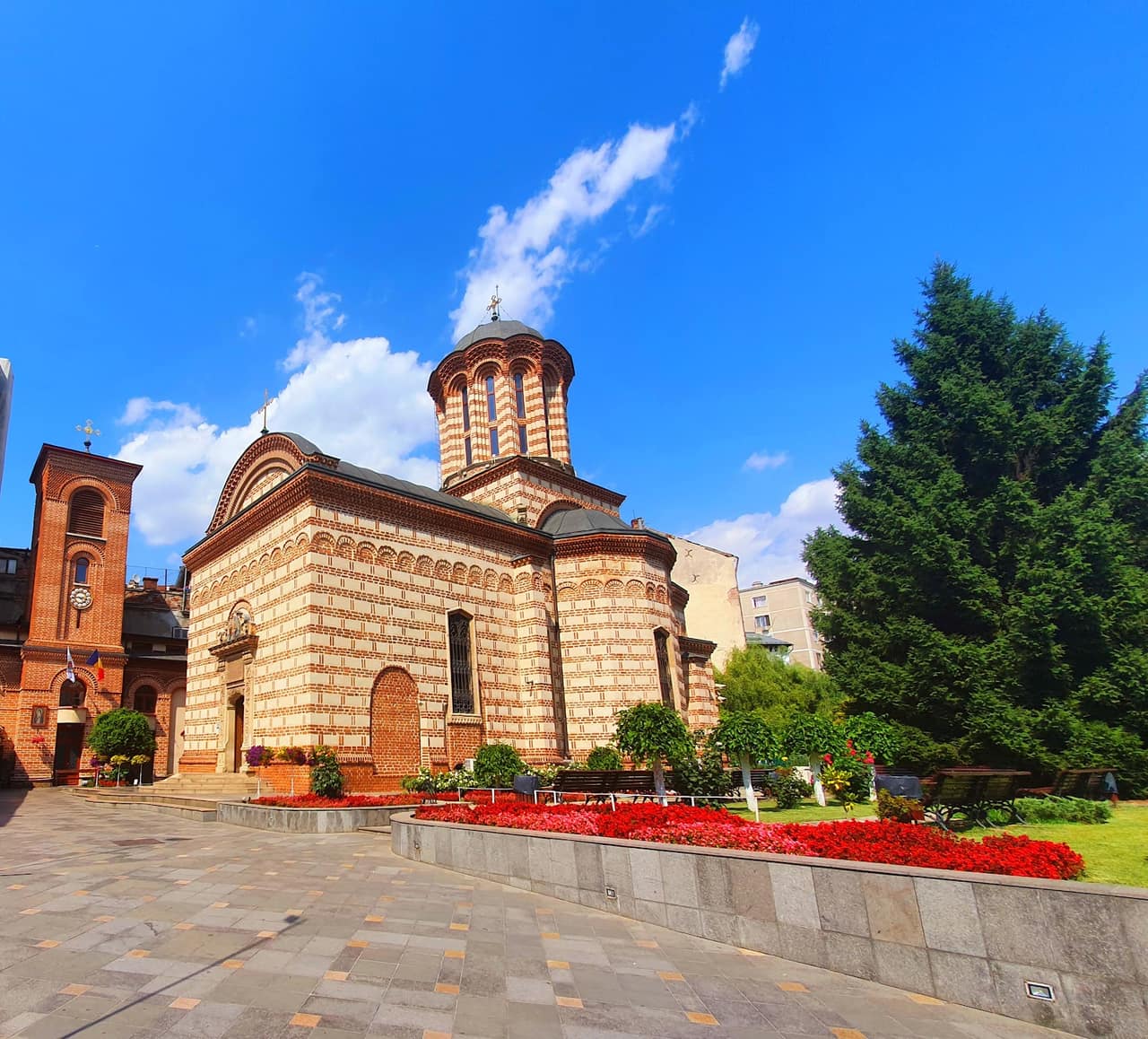
Over the following centuries, Bucharest competed with Targoviste for the role of residence of the rulers of Wallachia. Its favourable trading position and Ottoman pressure tipped the balance, and in the second half of the 17th century the city became the main princely residence. The Old Princely Court (Curtea Veche) remains a witness to this period.
A crossroads of trade
Much of the city's early importance came from its position on the routes linking Central Europe and the Ottoman world. Goods passing through gave their names to the streets of the old commercial core - Lipscani, named after merchants trading with Leipzig, sits beside lanes once organised by guild and trade. This concentration of crafts and commerce around the princely court formed the nucleus from which the modern city grew outward.
The Phanariot era
In the 18th century, under Phanariot rule, the city grew in population and importance, but also suffered fires, plague and political instability. The first schools and printing houses appeared, alongside an increasingly diverse urban life, with Greek, Armenian and Jewish merchants living next to Romanians.
Modern Bucharest and "Little Paris"
The 19th century brought rapid modernisation. In 1862, after the union of the Romanian Principalities, Bucharest became the capital of the unified Romanian state. French influence shaped its architecture and manners, and the city earned the nickname "Little Paris" thanks to its broad boulevards, Belle Epoque buildings and fashionable social life. The Romanian Athenaeum was built in this period (1888).
The interwar period
Between the two world wars, Bucharest lived through an age of brilliance: modernist architecture, cafes, a lively press, theatres and a cosmopolitan bourgeoisie. The Arch of Triumph was rebuilt in its current form in 1936, as a symbol of Greater Romania.
Trials of the 20th century
The first half of the 20th century also brought hardship. The city endured the upheavals of the two world wars, and in 1940 a powerful earthquake caused serious damage. These shocks left their mark on the urban fabric and on a population that nonetheless kept rebuilding and expanding, setting the stage for the radical transformations that followed mid-century.
The communist era
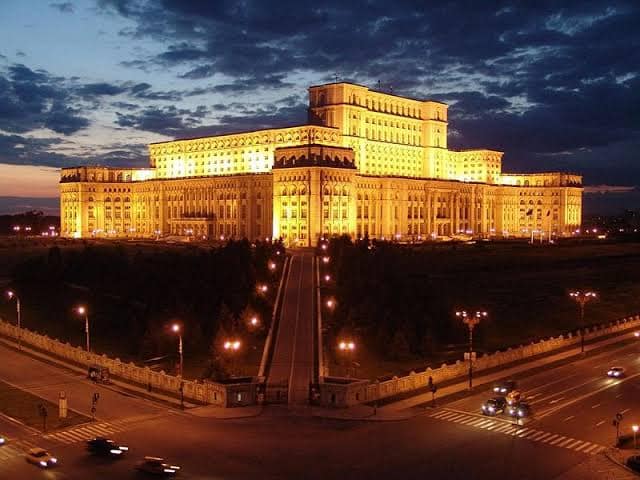
After 1947, the communist regime profoundly reshaped the city. The most radical intervention was the systematisation of the 1980s, when entire historic districts were demolished to make way for the Civic Centre and the colossal House of the People (today the Palace of the Parliament). The city expanded with vast housing estates.
After 1989
The Revolution of December 1989 began across the country and culminated in mass demonstrations in the centre of Bucharest. After the fall of the regime, the city entered a period of transition: the return of private property, free trade and, gradually, foreign investment.
Bucharest today
Today Bucharest is a city of contrasts - restored historic buildings next to office towers, new neighbourhoods and a vibrant cultural life. It remains the economic engine of Romania and the main point of entry for tourists, through Henri Coanda Airport.
Reading the city's layers
For the curious visitor, Bucharest can be read like a timeline written in buildings. The medieval core survives around Curtea Veche and the old commercial streets; the 19th-century "Little Paris" lingers along Calea Victoriei and in the mansions of the central districts; the communist decades are written large in the Civic Centre and the apartment estates; and the post-1989 era shows in the glass towers of the northern business corridors. Walking from one to the next is the simplest way to understand how the city came to be.
FAQ
When was Bucharest first mentioned?
On 20 September 1459, in a charter issued by Vlad the Impaler "in the citadel of Bucharest".
When did Bucharest become the capital?
In 1862, after the union of the Romanian Principalities, it was established as the seat of the new state.
Why is it called "Little Paris"?
Because of the 19th-century French influence on its architecture and urban life, still visible in the centre today. See the sights.