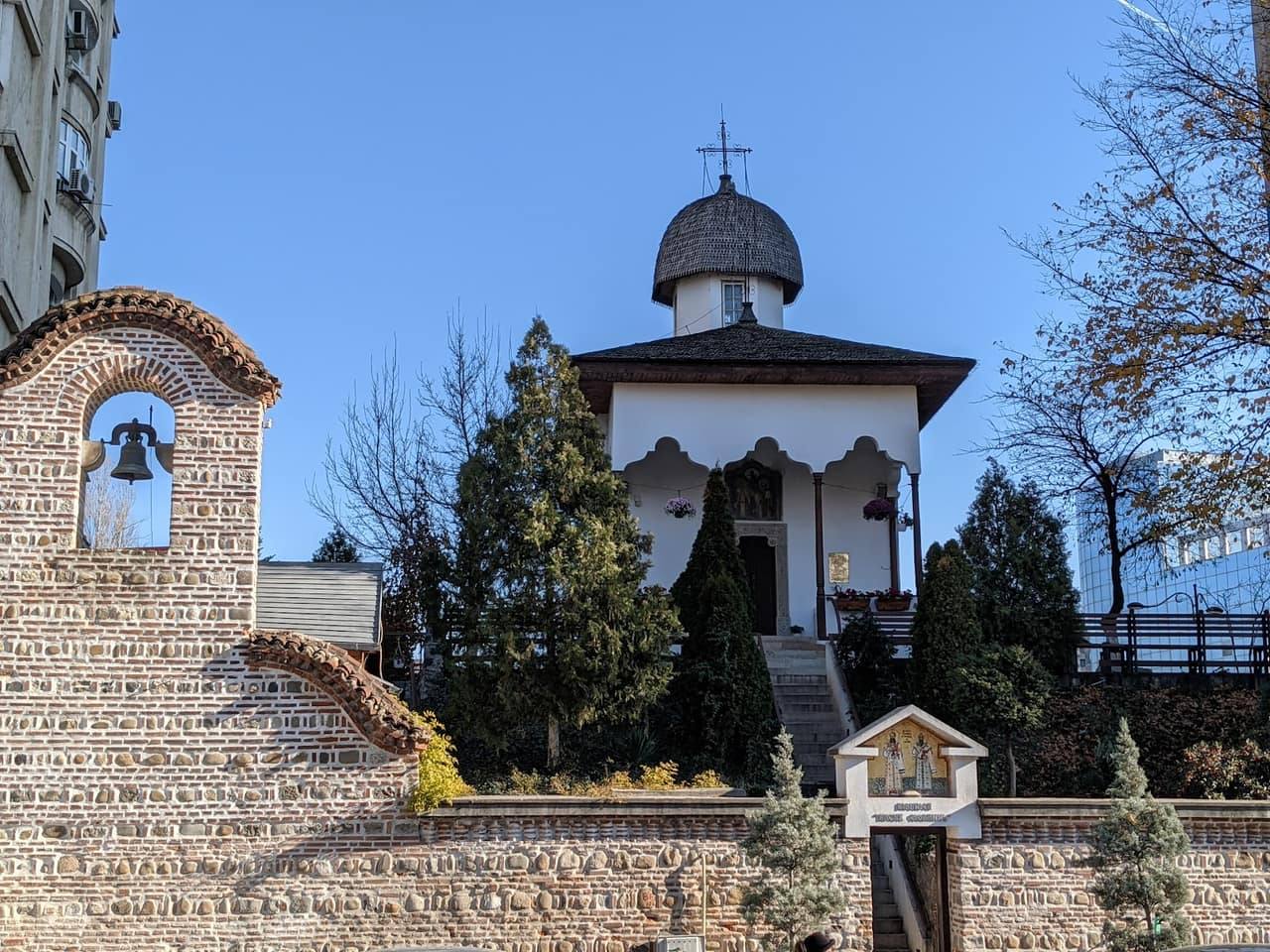
Like many old cities, Bucharest has its own founding legend. It is a lovely story, often retold, but it must be said from the outset: it is folklore, not proven history. No documents confirm it. Still, the legend is worth knowing, because it shapes how the city talks about itself and turns up in everything from street names to tourist guides.
The legend of the shepherd Bucur
The best-known version says that, long ago, on the banks of the Dambovita, a hard-working and sturdy shepherd named Bucur is said to have set up his sheepfold. He supposedly built a little church and a settlement around it, and after his name the place came to be called "Bucuresti" - meaning "Bucur's". On Mitropoliei Hill there is even an old little church popularly called "Bucur's Church", linked to this story, although its actual age is far more recent. The church is small and whitewashed, tucked below the larger Patriarchal complex, and visitors often look for it precisely because of the legend rather than the building itself.
What the documents actually say
The historical record is much drier than the legend. The name Bucharest first appears in writing in a document of 1459 issued in the chancellery of Vlad the Impaler (Vlad Țepeș), which is why that year is often cited as the city's first documented mention. The settlement existed before then, but as a market town and princely residence on the Dâmbovița, not as a shepherd's foundation. This is the version supported by sources, as opposed to the folklore above.
The origin of the name
Linguists offer more sober explanations. The most widely accepted ties the name to a personal name, Bucur, common in older times, plus the suffix -esti, which denotes belonging (as in countless Romanian village names: Popesti, Ionesti). So "Bucuresti" would mean "the settlement of Bucur's people". Another popular interpretation links the name to the word "bucurie" (joy), but this remains an affectionate rather than a scientific etymology.
Other stories and urban myths
- It is said the name comes from the joy of travellers who, after a long journey, finally reached the market town - a charming but unproven tale.
- Around the Old Princely Court and the princely palaces, many legends circulate about hidden treasures and secret tunnels.
- A persistent local belief holds that a network of medieval passages links the old churches and courts beneath the centre; archaeologists have found cellars and foundations, but nothing that matches the dramatic tunnels of the stories.
These stories say more about the city's imagination than about its real past. For the documented facts, see the history of Bucharest and then wander through the sights of the old town.