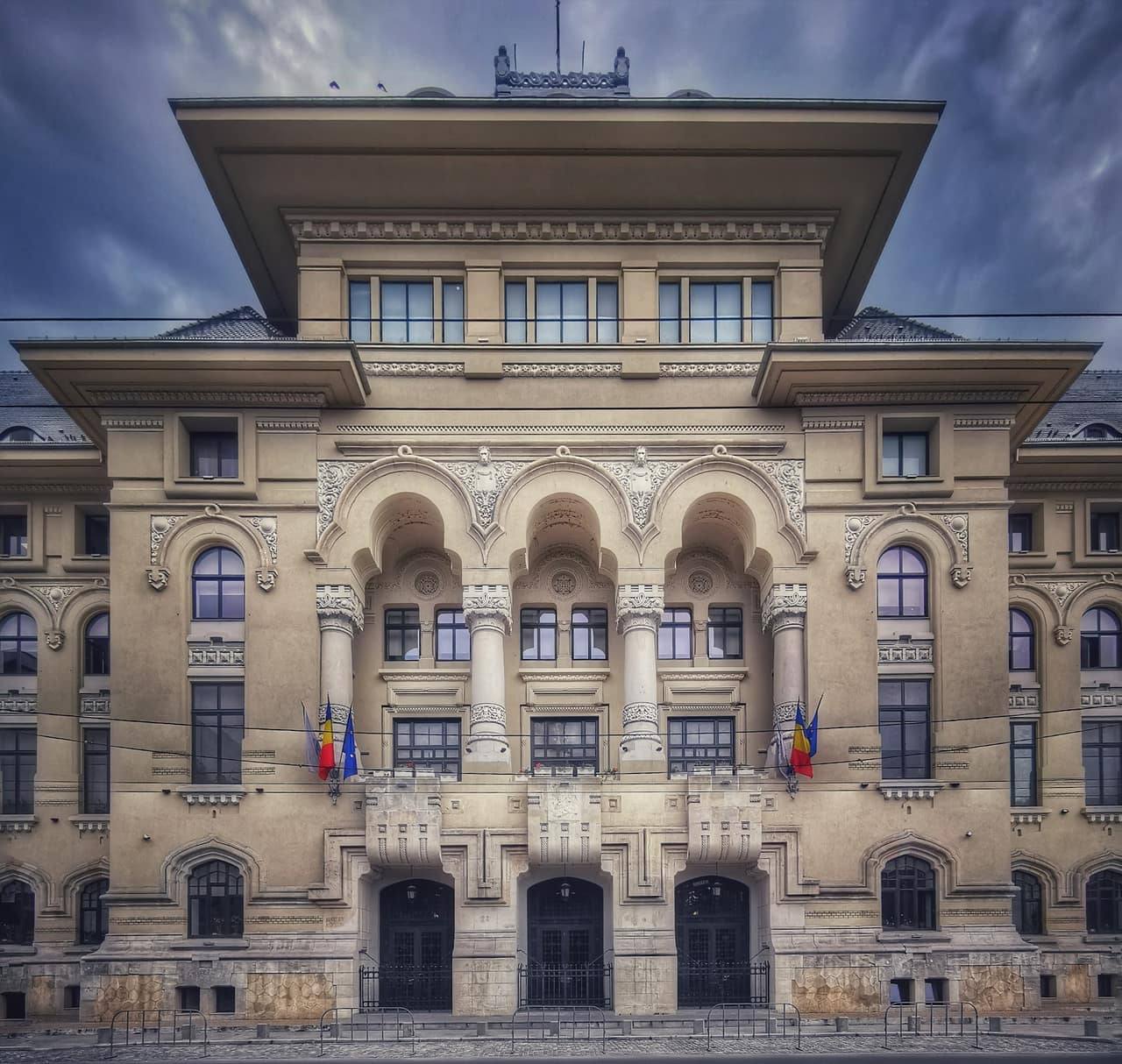
Bucharest is not a city with a single town hall but a two-tier administrative machine. At the top sits the City Hall of Bucharest (PMB), led by the General Mayor, elected directly by the city's residents. Beneath it operate six sector town halls, each with its own mayor and local council.
The General Mayor and PMB
The General Mayor oversees everything that holds the city together across sector boundaries: the water and sewage network, district heating, public transport, the major boulevards and connecting arteries, the large parks, and the municipal companies. City-wide decisions pass through the General Council of Bucharest (CGMB).
The General Mayor and the General Council are elected for a four-year term, on the same date as local elections across the country. The CGMB acts as the city's deliberative body, voting the municipal budget, the major urban-planning documents and the regulations that apply across all six sectors, while the General Mayor heads the executive that puts those decisions into practice.
The six sectors
The current division into six sectors dates from August 1979. The sectors fan out like slices of a pie, radiating from the centre toward the outskirts, so each one contains a piece of the central city and a piece of the edge. They are numbered 1–6 clockwise, starting in the north.
Each sector town hall handles the everyday life of the neighbourhoods: secondary streets, schools and kindergartens, sanitation, local parks, and green spaces.
This wedge-shaped design was deliberate: by giving every sector both a central and a peripheral slice, the model spreads valuable central territory and revenue more evenly than a simple ring or quadrant layout would. In practice it means that a single sector can stretch from a dense historic district near the river all the way to housing estates and semi-rural land at the city limits.
How responsibilities split
- PMB — major infrastructure, transport, city-wide utilities, overall urban planning.
- Sector town halls — proximity administration, schools, sanitation, local streets.
- CGMB and the sector councils — elected decisions, budgets, regulations.
Why the two tiers sometimes clash
Because responsibilities overlap at the edges - a road may be "main" for the PMB but border a "local" street run by a sector, and budgets are voted separately - coordination between the two levels matters enormously. When the General Mayor and the sector mayors come from different political camps, decisions on shared projects can slow down. For residents, the practical takeaway is simple: knowing whether an issue belongs to the PMB or to your sector town hall is the first step to getting it solved.
Practical guide for residents
For most everyday matters - a pothole on a side street, a permit, a school enrolment, a problem with local sanitation - the sector town hall is the right address. For anything touching the big networks - public transport, district heating, water supply, the main boulevards - the PMB and its municipal companies are responsible. Each sector also has its own administrative services and online portals, so checking which sector you live in is a useful first step.
To see how this division translates onto the map, browse the neighbourhoods guide and the article on the neighbourhoods of Bucharest.