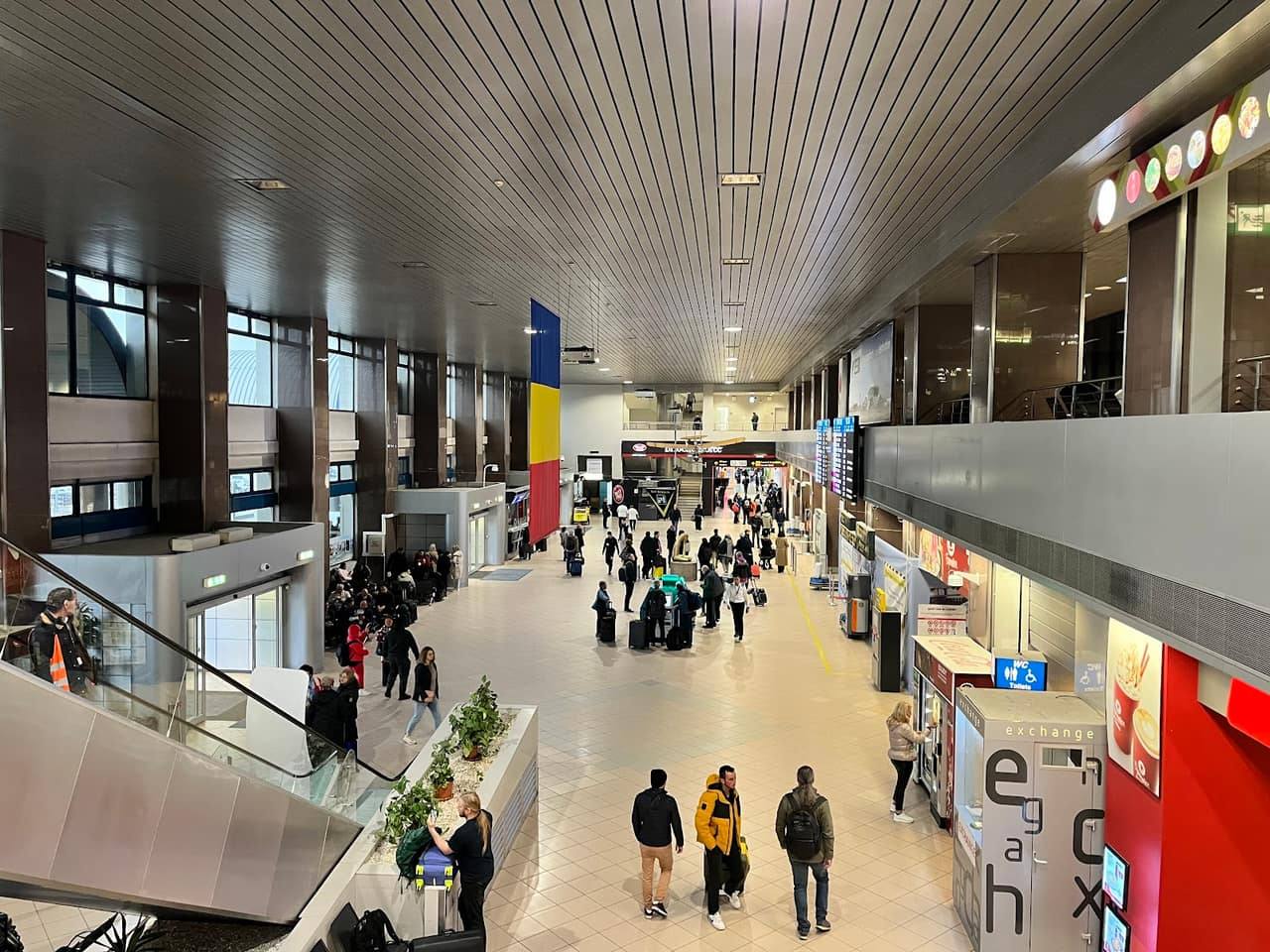

You land at Henri Coanda (OTP), Bucharest's main airport, located in Otopeni about 17 km north of the centre. The good news: you have more options than you'd think, from a few lei on the bus to a door-to-door private transfer. Which one is right depends on your luggage, your budget, the time you arrive, and how much you mind traffic. Here's what actually works in 2026, with the trade-offs spelled out.
A quick orientation first: arrivals and departures are clearly signposted in Romanian and English, and the public-transport options all leave from points close to the terminal. Whatever you choose, it helps to have a contactless bank card or phone ready, since that's how most fares are paid now.
Bus 100 Express, the cheapest option
The 100 Express line connects the airport to Piata Unirii, right in the centre. It replaced the old 783 line in December 2023, so if you see 783 mentioned in older guides, ignore it. The ticket costs around 3 lei and is paid contactless directly on board, with your bank card or phone, with no need to buy a ticket in advance.
It's the ideal option if you have light luggage and aren't in a hurry. The journey time depends heavily on traffic, which in Bucharest can be unpredictable at peak hours. Details on routes and fares on the public transport page.
One thing to keep in mind: the bus can get crowded, and with large suitcases it's less comfortable than the train or a car. If you arrive in the middle of the day or evening rush, build in extra time, traffic on the airport road can add a fair bit to the trip.
The CFR train, the most predictable
If you want to avoid traffic entirely, take the CFR train between the airport and Gara de Nord (the North Station). The ticket costs around 6.50 lei and the journey takes about 20-25 minutes, with no traffic surprises. There's a station right at the airport, connected to the terminal.
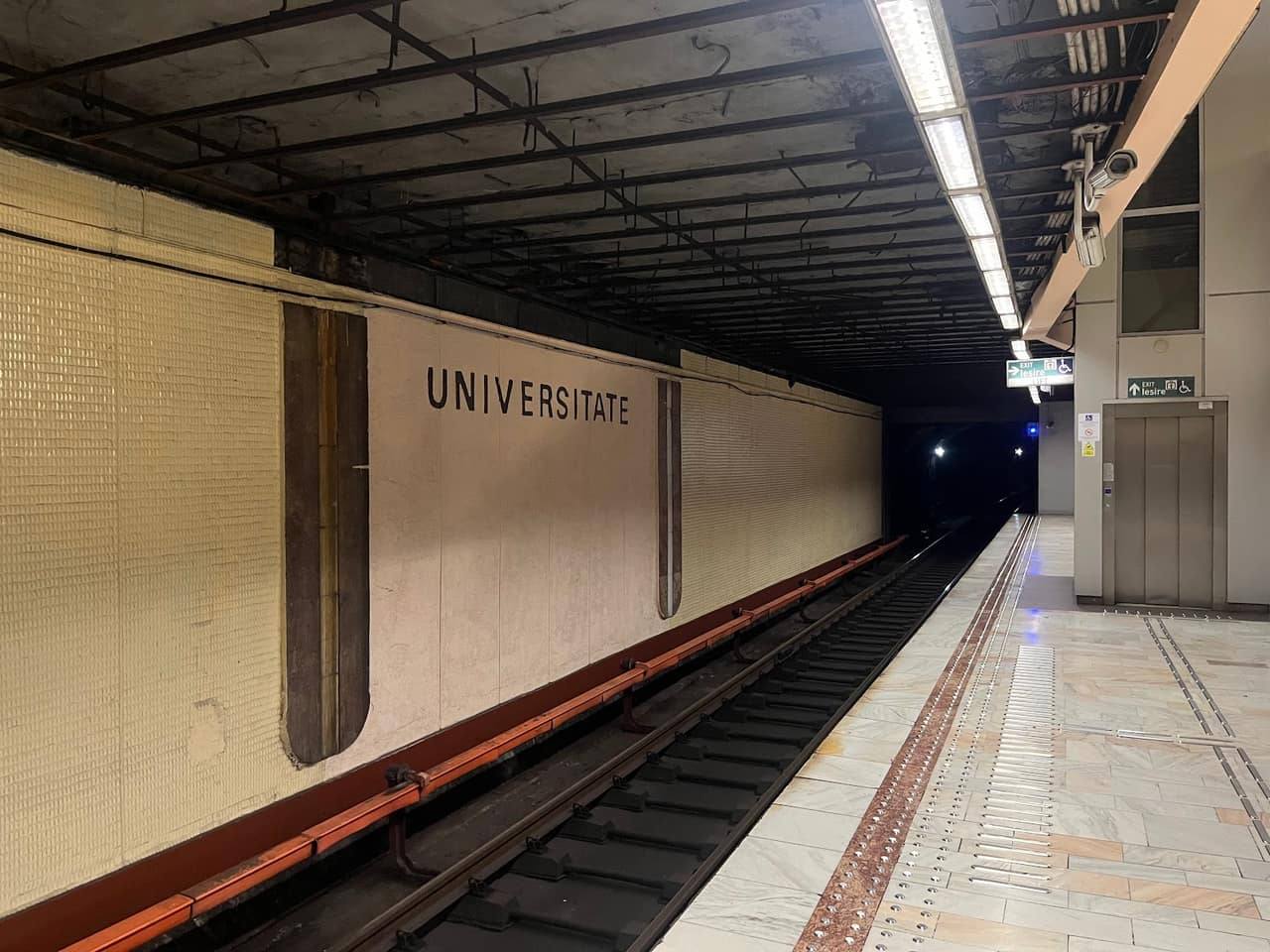
From Gara de Nord you connect directly to the metro, from where you reach anywhere in the city quickly. It's the preferred combination for many travellers who want predictability.
The catch is frequency: trains don't run as often as buses, so check the timetable and align your arrival, especially late at night. When the schedule lines up, though, it's the most reliable way into town because nothing depends on road traffic.
Taxi and Bolt, door-to-door comfort
For maximum comfort, there's taxi or ride-hailing apps such as Bolt. For taxis, use the automated terminals in the arrivals area to order a car at the displayed rate and avoid the pushy offers in the hall. With Bolt you see the estimated price before you confirm, which removes surprises.
It's the most convenient option with a lot of luggage or if you arrive at night, when public transport is sparser.
A practical note on ride-hailing: there's usually a designated pickup point for apps, follow the signs rather than waiting at the regular taxi rank. Prices can surge at busy times or in bad weather, so the in-app estimate is your best guide before you confirm.
Private transfer
If you want everything arranged ahead of time, a private transfer waits for you at arrivals with your name on a sign and takes you straight to your accommodation. It costs more than the other options but is hassle-free, useful for groups or families.
It also takes the guesswork out of a late or very early flight, when you may not want to figure out timetables. For a family with children and luggage, the fixed price and door-to-door service often justify the extra cost.
About the M6 metro and Baneasa airport
Many people ask about a metro directly to the airport. The M6 metro line (Gara de Nord-Otopeni) is under construction and, according to estimates, should be ready around 2028-2029. For now you can't count on it; we mention it only as a future project.
Baneasa (BBU) airport is closer to the city but mainly serves private and business flights, so for ordinary commercial flights you'll still use Henri Coanda.
Our recommendation
- Lowest budget, light luggage: bus 100 Express.
- Predictability, no traffic: CFR train + metro.
- Comfort, heavy luggage or at night: Bolt or a taxi from the terminal.
- Group or family: private transfer.
Quick comparison
- Bus 100 Express: ~3 lei, cheapest, traffic-dependent, fine with light luggage.
- CFR train: ~6.50 lei, ~20-25 min, traffic-proof, less frequent.
- Taxi/Bolt: higher cost, fully door-to-door, best with luggage or at night.
- Private transfer: highest cost, pre-booked, best for groups and tight schedules.
FAQ
How much does it cost to get from OTP to the centre by bus?
Bus 100 Express costs around 3 lei, paid contactless on board with a card or phone. It's the cheapest option to Piata Unirii.
Is there a direct train between the airport and the city?
Yes. The CFR train links Henri Coanda to Gara de Nord, with a ticket of around 6.50 lei and a journey of about 20-25 minutes, unaffected by traffic.
Does the metro reach the airport?
Not yet. The M6 line to Otopeni is under construction, with an estimated completion around 2028-2029. Until then, use bus 100, the CFR train, or taxi/Bolt.
Is it safe to take a taxi from the airport?
Yes, if you use the automated ordering terminals in the arrivals area or an app like Bolt, where you see the price in advance. Avoid the pushy offers in the hall.
What's the best option if I arrive late at night?
A taxi from the automated terminal or Bolt, since public transport thins out at night. If you've planned ahead, a private transfer removes any uncertainty about timetables.
Can I pay for the bus and train with a card?
The bus 100 Express is paid contactless on board with a bank card or phone. For the CFR train, buy the ticket as indicated at the airport station before boarding; check the public transport page for current details.
Which is faster, the bus or the train?
The train is more predictable at about 20-25 minutes because it's unaffected by road traffic. The bus can be quick when roads are clear but slows considerably at peak hours.