Bucharest doesn't reveal itself at first glance. It's a palimpsest of a city, where nineteenth-century boulevards stand shoulder to shoulder with communist-era blocks and lively terraces, and the first impression matters far less than the second. If this is your first visit, a handful of simple orientation points will save you hours of uncertainty — and free you up to enjoy the city instead of wrestling with it.
This guide is your starting point: everything you need to know before you set foot on the pavement, plus links to our detailed guides on each individual topic. Keep it handy for your first few days.
Getting in from the airport
Henri Coandă Airport (Otopeni) is the main entry point for most visitors. You can choose between the train, an express bus, an official taxi from the designated rank, or a private transfer booked in advance — each has different advantages depending on your luggage, arrival time and budget.
- Never get into an unofficial taxi offered right outside the terminal — stick to the marked taxi rank or a ride-hailing app.
- For a step-by-step breakdown of tickets and routes, read our guide From the airport to downtown.
Getting around the city
Bucharest has a dense public transport network — metro, buses, trams and trolleybuses (STB) — complemented by Bolt and Uber, both available almost instantly in central areas. The metro is the fastest way to cross the city during rush hour, when surface traffic becomes unpredictable.
- The metro efficiently connects the main train station, the airport (partially) and the central districts.
- Bolt/Uber are the most convenient option for short hops or heavy luggage.
- For tickets, passes and line maps, our guide Getting around Bucharest goes into detail.
- Check your position against sights and stops anytime on the map.
Money
The official currency is the Romanian leu (RON). Cards are widely accepted — at restaurants, shops, ride-hailing apps and most museums — but it's worth carrying some cash for markets, kiosks and small neighbourhood terraces. ATMs are plentiful throughout the centre.
- Avoid street currency exchange offering rates that look too good to be true — licensed exchange offices post transparent rates with no hidden fees.
- More practical details, from ATMs to typical opening hours, are in Practical info.
Language
Romanian is the official language, but English is spoken comfortably by younger generations and is nearly universal in tourism — hotels, restaurants, museums. In less touristy areas or with older residents, a few basic Romanian words (hello, thank you, please) go a long way and are genuinely appreciated.
What to see on day one
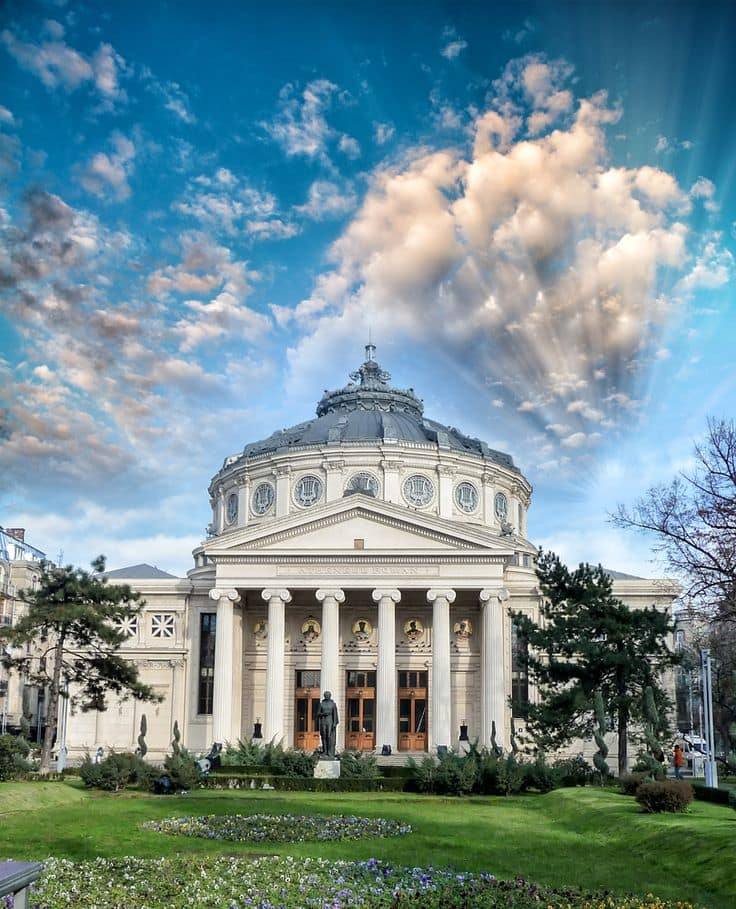
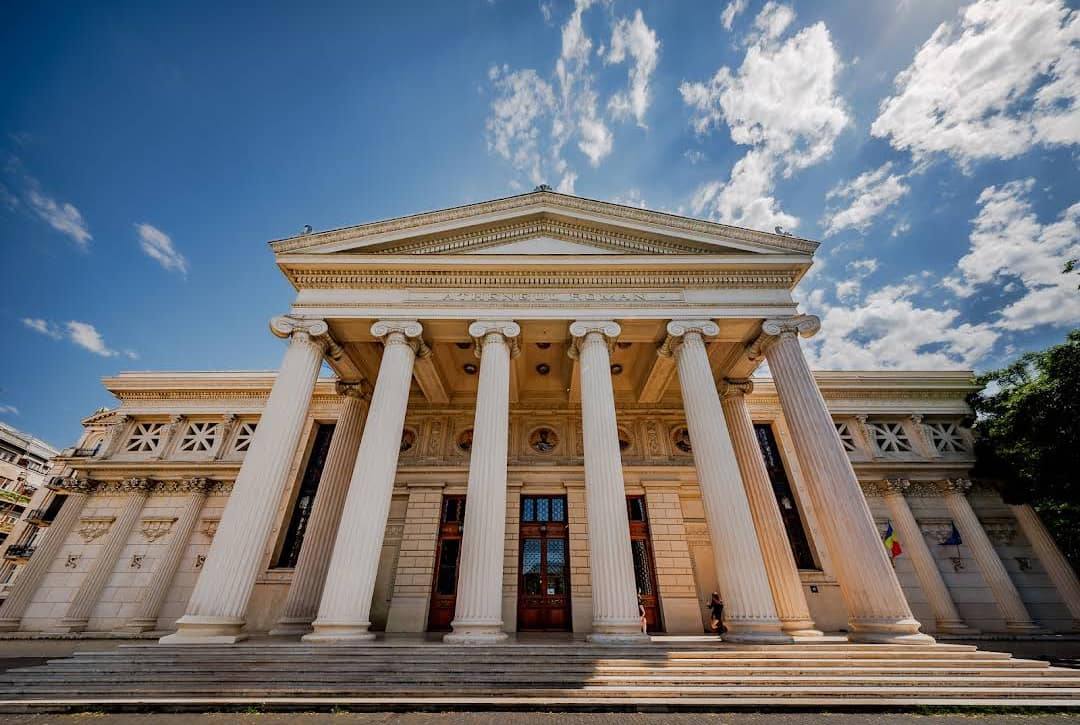
If you only have a few hours, focus on the historic centre (Lipscani), Calea Victoriei, and one landmark such as the Palace of the Parliament or the Romanian Athenaeum. From there, the city naturally opens up into parks, museums and neighbourhoods with their own distinct character.
- Don't try to see everything — Bucharest reads better as a series of themed walks than as a sightseeing sprint.
- The full list, filterable by category, is in sights.
- For a ready-made two-day itinerary, use our guide 48 hours in Bucharest.
Safety
Overall, Bucharest is a safe city for tourists, with the usual precautions that apply to any European capital: watch your pockets in crowded areas and on public transport during rush hour, and check taxis before getting in. The single emergency number, covering police, ambulance and fire services, is 112.
- Save 112 in your phone on day one, even if you hope you'll never need it.
Tipping
Tipping isn't legally required, but it's a widely accepted practice at restaurants and quality services — around 10% of the bill is considered standard, left in cash or added to the card payment where that option exists. For Bolt/Uber drivers, rounding up the fare is enough.
Connectivity
A prepaid local SIM or an eSIM gets you stable mobile data for the length of your stay at a modest cost — especially useful for navigation, transport apps and on-the-go bookings. Free Wi-Fi is available in most cafés, hotels and many public spaces around the centre.
Useful tools on the site
Beyond our guides, the site has a few tools built specifically for your first days in the city:
- Map — see sights, restaurants and transport stops in a single view.
- Right now — a live snapshot of the city as you check it: what's open, what's happening, current conditions.
- Practical info — quick answers to the administrative and logistical questions that always come up on a first visit.
FAQ
How much time do I need for a first visit to Bucharest?
Two to three days are enough for a solid first contact with the city — the historic centre, a museum or two, a park and a few terraces. For a detailed plan, use our guide 48 hours in Bucharest, easy to extend if you're staying longer.
Can you visit Bucharest entirely on foot?
The historic centre and Calea Victoriei are very walkable, but the city is spread out, and some major sights sit several kilometres apart. Combining walking with the metro or Bolt for the longer stretches is the most efficient approach.
Do I need to speak Romanian to get by?
No. English covers most tourist situations, especially in the central area and among younger generations. A few polite words in Romanian are a nice touch, not a necessity.
Is it safe to use my card everywhere?
Generally yes — cards are widely accepted across the city, but it's worth carrying cash for markets, kiosks and small terraces in outlying neighbourhoods. More on payments and other practical details is in Practical info.