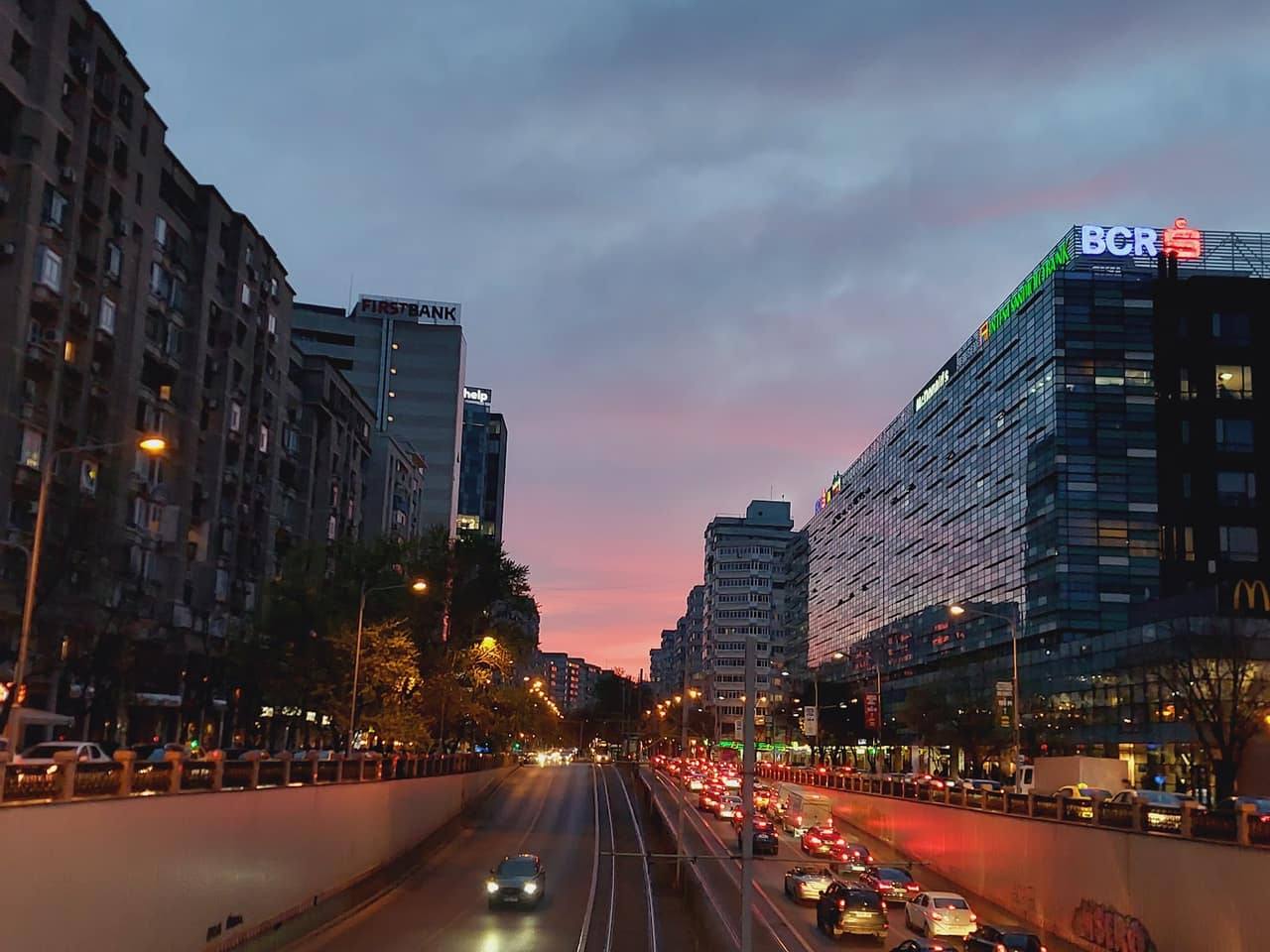
Bucharest doesn't reveal itself from a car. The city shows its real face on foot: flaking belle-époque façades pressed against communist-era blocks, courtyards with grapevines, trams grinding along century-old rails.
We've put together four walking routes, each with its own character, covering much of what's worth seeing in central Bucharest. Do them separately or combined — and for a full weekend, follow our 48 hours in Bucharest guide.
The Calea Victoriei Route — the belle-époque spine
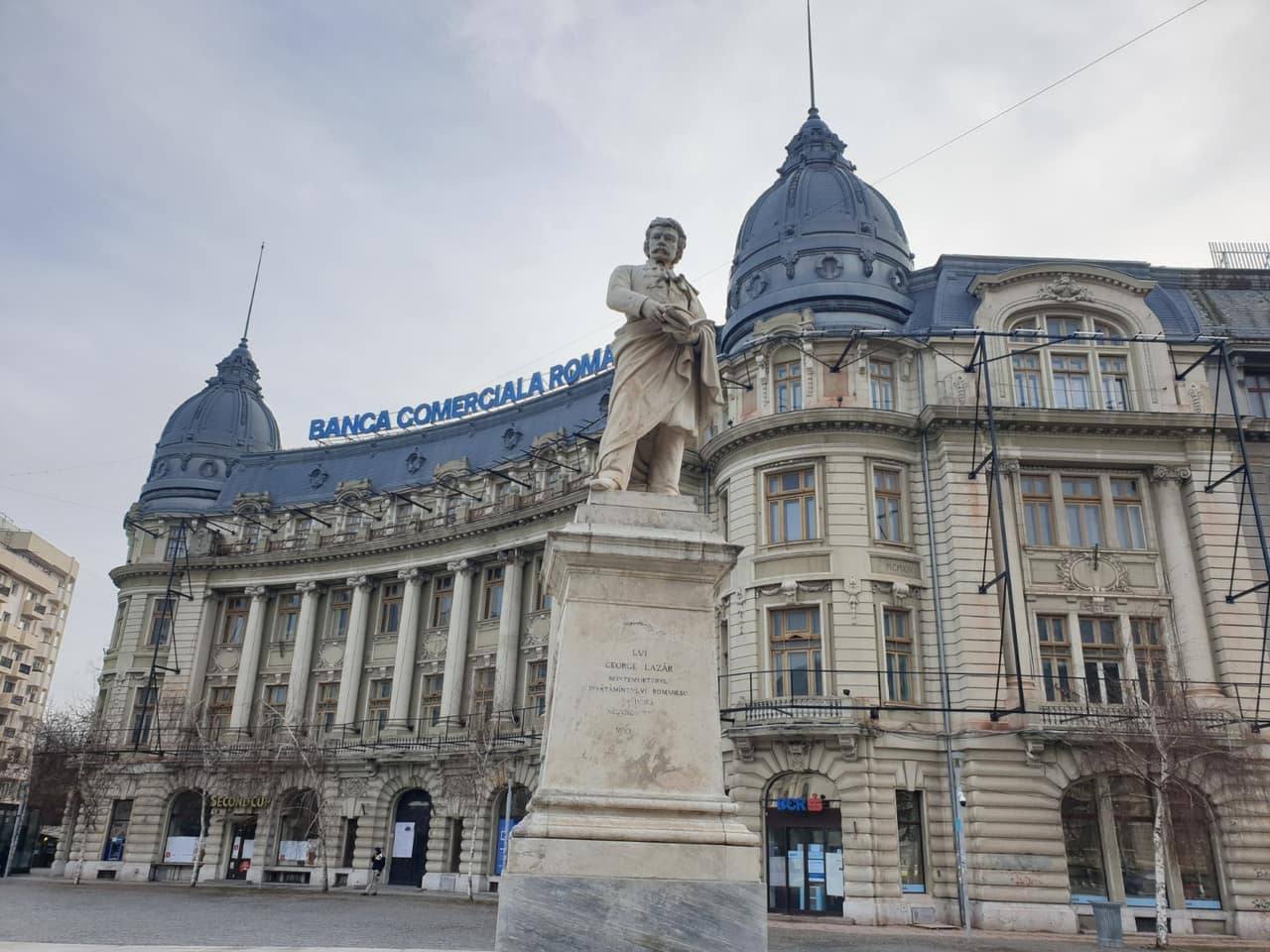
Calea Victoriei is arguably the city's most elegant street and its most legible lesson in urban history. The route starts near Piața Victoriei, or from Universitate if you'd rather walk the other way, and descends toward Piața Unirii past some of the most photogenic buildings in the city.
Along the way you'll pass the CEC Palace, with its glass-and-metal dome, the National Museum of Art — the former Royal Palace —, the Romanian Athenaeum, whose rounded steps are a favorite gathering spot for tour groups, and historic cafés like Casa Capșa. The feel is of a classic European boulevard with a discreet undertone of decadence — plaster peels in places, and the contrast with the glass buildings nearby is part of the charm.
- Length: without long stops, feels like roughly an hour; with a couple of museum visits it can easily fill a morning.
- How to get there: by metro to Piața Victoriei or Universitate station.
- Tip: go early in the morning, while the light is low and the street hasn't yet filled with traffic.
The Old Town and Piața Unirii Route
If Calea Victoriei is the city's elegant spine, the Old Town is its chaotic, living heart, woven from narrow lanes, uneven cobblestones, and hidden courtyards. The route starts naturally in Piața Unirii, with its view toward the Palace of Parliament, then loses itself along Lipscani, Șelari, and the surrounding streets.
Here you'll find the remains of the Old Princely Court — Vlad the Impaler's medieval palace, now open-air ruins —, Stavropoleos Church, a Brâncovenesc-style jewel hidden among commercial buildings, and Hanul lui Manuc, a former merchants' inn now a courtyard of terraces. In the evening, the same streets fill with live music and lights.
- Length: a relaxed loop feels like roughly forty-five minutes, double that with a coffee stop or a look inside the churches.
- How to get there: Piața Unirii metro station, right at the edge of the neighborhood.
- Tip: come back in the evening for contrast — the Old Town lives two different lives.
The Herăstrău Park Loop
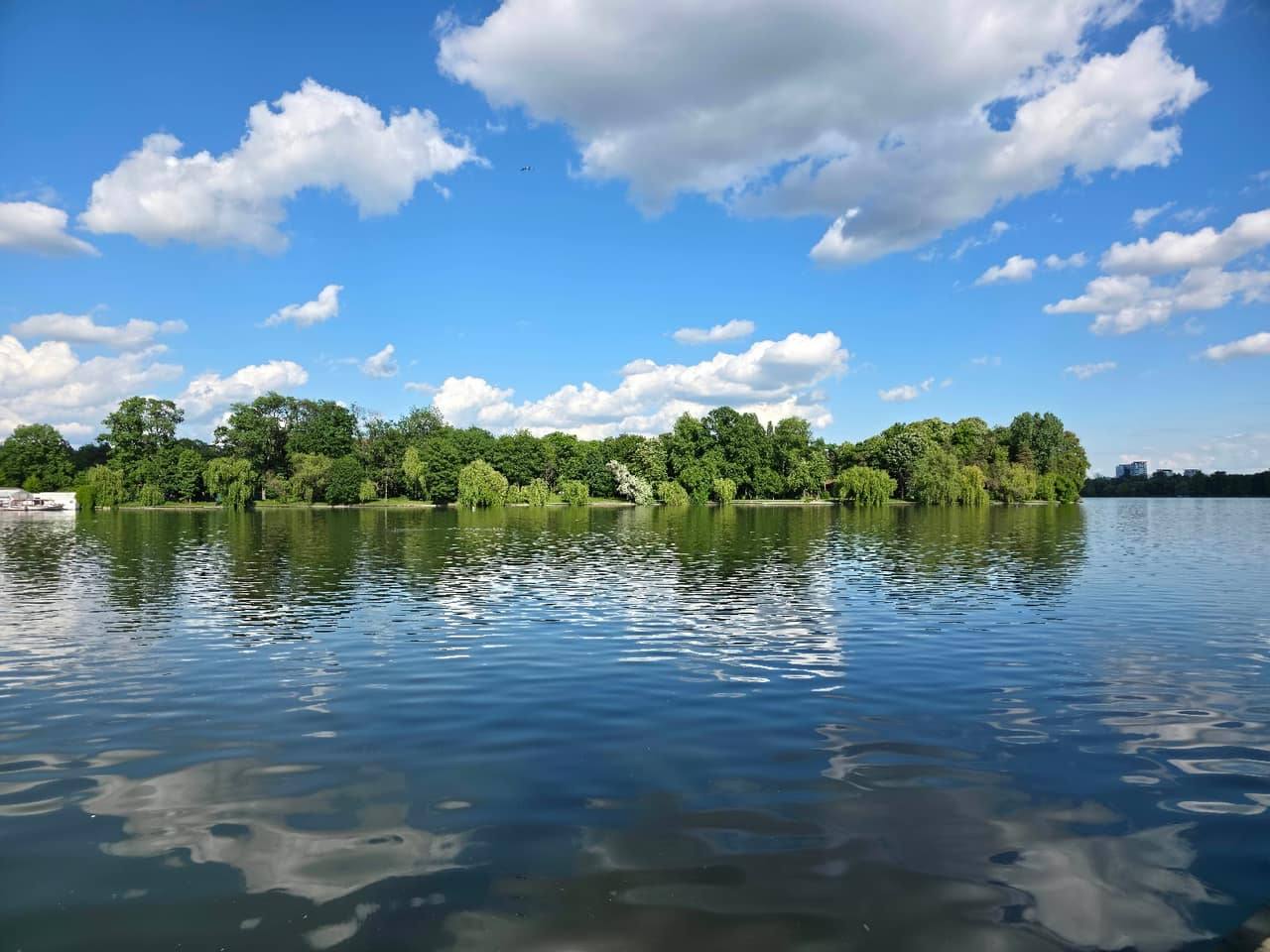
For a break from stone and traffic, the loop around Lake Herăstrău is the route to take. The park, one of the city's largest and best-kept green attractions, offers a walk entirely different from the historic center: shaded paths, a lakeshore with boats and terraces, and, at the edge, the Village Museum — a reconstructed traditional Romanian village under the open sky.
The full loop has no single "correct" route — take a short circuit through the central area, or a longer walk along the whole shoreline. On weekends, the paths fill with locals running or cycling; the atmosphere feels more local than touristic.
- Length: a relaxed loop, without the Village Museum, feels like roughly an hour and a half; with the museum, a full morning.
- How to get there: Aviatorilor or Piața Victoriei metro station, from where the park is just a short walk away.
- Tip: come early on a weekday for quiet; on weekends the park is, deservedly, full of life.
The Cotroceni Route — among quiet villa streets
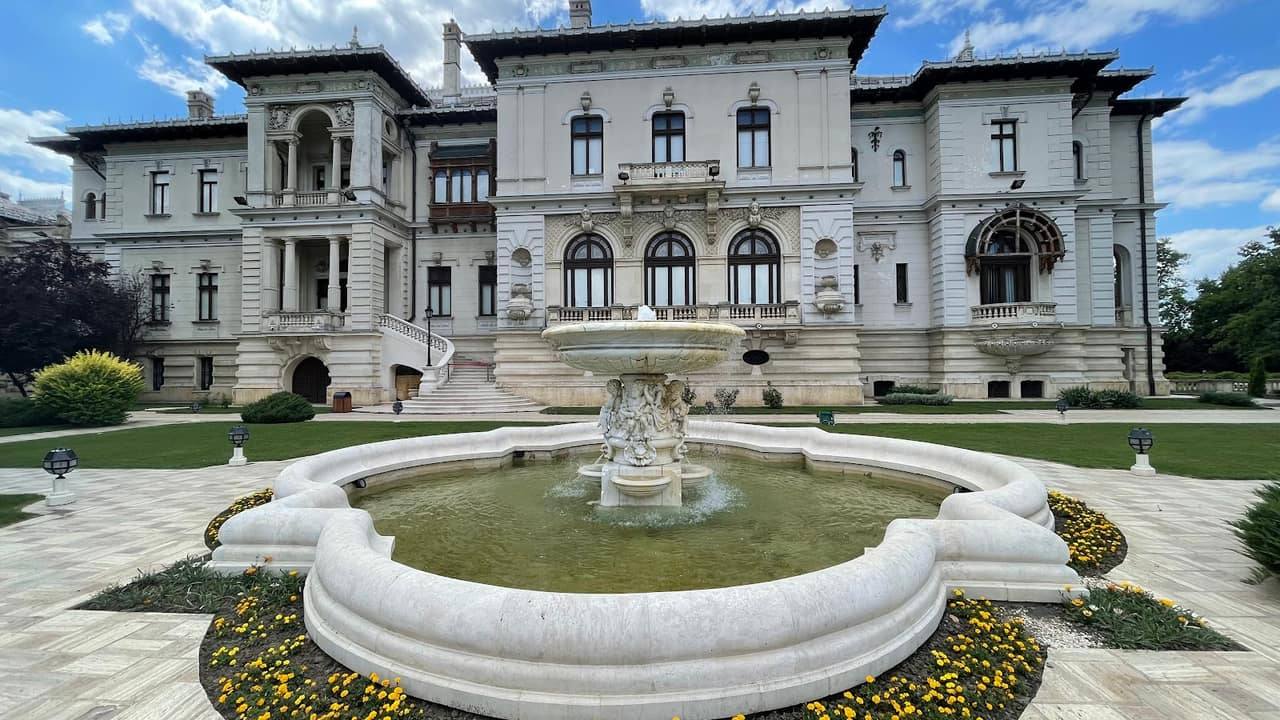
Cotroceni is the neighborhood that most often surprises visitors — a quiet residential area of early-twentieth-century villas, well-kept gardens, and chestnut-shaded streets, just a few stops from the bustle of the center. The route follows small streets around Cotroceni Palace, an official residence partly open as a museum, and the University's Botanical Garden.
This isn't a route packed with sights, but a contemplative stroll — the kind of neighborhood where you slow your pace without quite noticing, admiring wrought-iron gates and eclectic architecture.
- Length: an unhurried walk feels like roughly an hour, plus extra time for the Botanical Garden if you'd like to visit.
- How to get there: Eroilor or Politehnica metro station drops you at the edge of the neighborhood.
- Tip: a good route for late afternoon, when the light filters beautifully through the tree canopies.
Practical tips for walking the city
- Footwear: pavement is often uneven, especially in the Old Town — choose comfortable shoes, not heels.
- Season: spring and autumn are the best seasons for walking; summers can be scorching, winters call for warm layers.
- Combine with the metro: the metro network covers the starting points of these routes well.
- Pace: don't rush to tick off all four routes in a single day — Bucharest is best appreciated in small doses.
FAQ
Which route is best if I only have a few free hours?
The Calea Victoriei route — it's compact, easy to follow on foot, and packs many of the city's landmark buildings onto a single street.
Are these routes suitable for families with children?
Yes, all four are accessible, though the loop around Lake Herăstrău is probably the most relaxed for kids, thanks to the green space and its leisurely pace.
Can I combine several routes in a single day?
It's possible, especially the Old Town and Calea Victoriei, which sit close together, but don't force all four — for a full, balanced two-day plan, see the 48 hours in Bucharest guide.
Do I need a map or audio guide for these routes?
Not really — all four areas are compact enough for a phone map, and the main landmarks are usually visible from a distance.