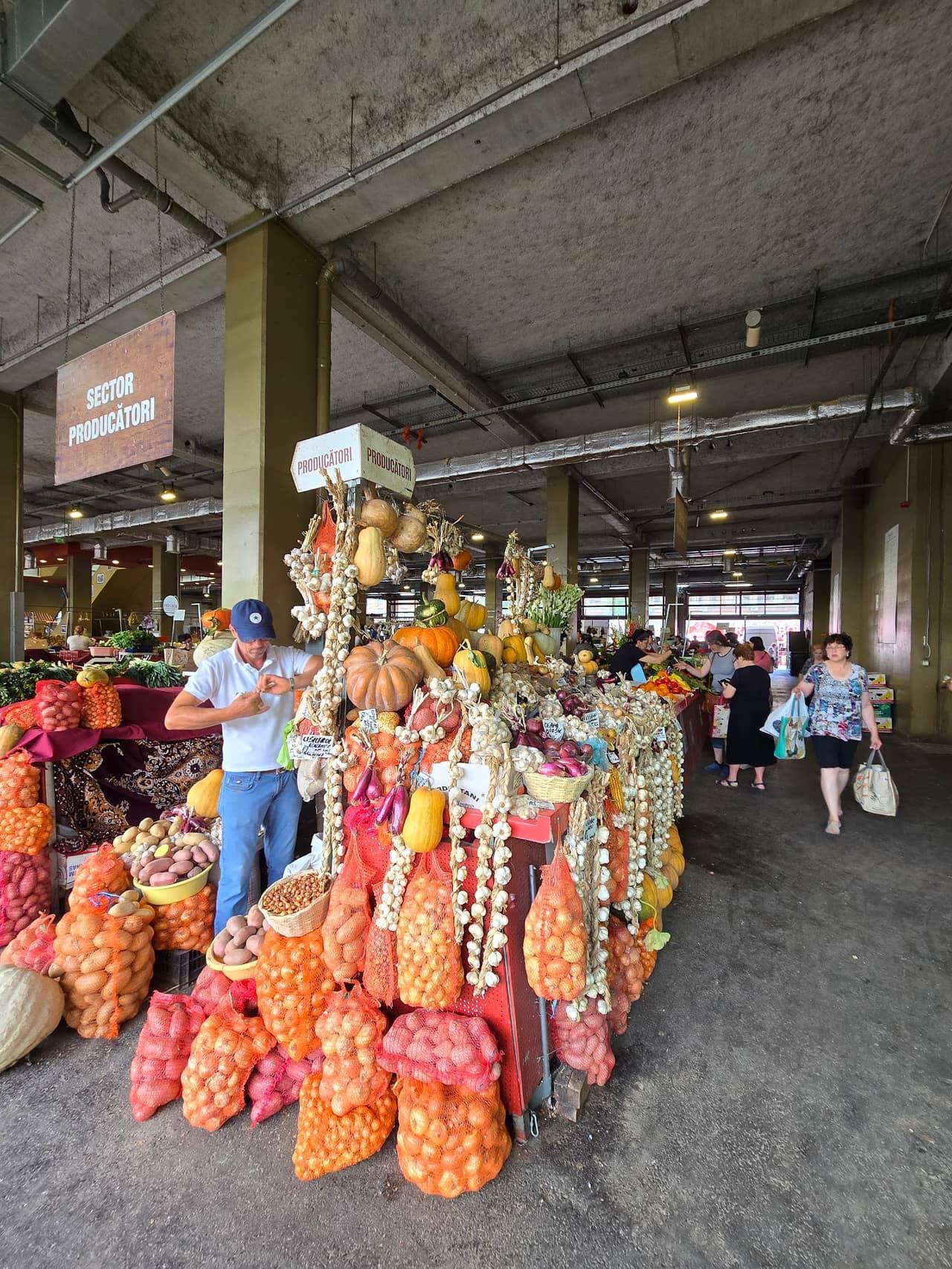
Bucharest reveals its character most clearly not in museums or on boulevards, but in its everyday markets — places where the murmur of stalls, the smell of freshly cut parsley and vendors calling out their prices form an urban theatre no restaurant can replicate. This is where the city is actually bought: seasonal vegetables from the surrounding countryside, sheep's cheese from a producer the seller knows by name, pickles ladled straight from the barrel.
There are at least five markets worth a morning of your visit, each with its own personality — from Obor, the popular giant with its legendary grill, to Amzei, the polished version in the west-central district. Here they are, one by one, with everything you need to know before you set off with empty bags.
Piața Obor, the mother of all markets
Obor is Bucharest's oldest and largest market, a maze of halls, stalls and counters spread across several streets in the north of the city. You'll find everything here — cheeses from producers in the hills, honey from hillside apiaries, onions and potatoes still sold in raffia sacks the way they were thirty years ago. It's a market built for locals rather than tourists, which is exactly what makes it feel so authentic.
But Obor isn't only about shopping: it's also about its grill, one of the city's oldest and most beloved food rituals. The smoke from grilled mici and sausages reaches you a street away, and the queue at the counter is part of the experience, not an inconvenience. We've written a full guide to the mici ritual at Obor — worth reading before you go, so you know exactly what to order.
Piața Amzei, the elegant west-central market
If Obor is the city's popular soul, Amzei is its polished counterpart. The market, with its renovated hall and surrounding terraces, has become a destination in its own right — the kind of place where you can buy seasonal tomatoes and then sit down for coffee a few steps away. There are fewer stalls than at Obor, but the quality and presentation are carefully kept, and the surrounding streets hold some of the best addresses among the city's recommended restaurants.
Amzei is ideal for a relaxed morning of market-browsing: cherries and apricots in summer, quince and pumpkin in autumn, good cheese year-round. It's also a good place to watch what gentrification looks like when it touches a traditional market without stripping away its neighbourhood charm entirely.
Hala Matache, the gateway to a reborn district
On the edge of the historic centre, Hala Matache reopened after a major renovation and has become a landmark for the area around it, one of those pockets of the city in the middle of a real transformation. The hall itself is a fairly modern structure with organised stalls, but the real charm lies in the neighbourhood surrounding it — old houses, small workshops and new restaurants opening year after year. For anyone wanting to understand how Bucharest's neighbourhoods are changing beyond the classic tourist centre, the Matache area is a useful case study.
Floreasca and Dorobanți, the neighbourhood markets
Not every Bucharest market needs to be an event in itself. Floreasca and Dorobanți are smaller, neighbourhood markets used mostly by locals for everyday shopping — a less curated picture of how the city actually stocks its kitchens. Steady producers, fair prices and a slower rhythm than at Obor — worth seeking out if you're staying a while and want a routine rather than a photo opportunity.
Market etiquette: cash, gentle haggling, seasonality
Bucharest's markets run on a set of unwritten rules worth knowing before you dive in:
- Cash is the rule, not the exception. Many stalls have no card reader, so bring banknotes, ideally small ones.
- Haggling exists, but quietly — a slightly rounded-down price for a larger quantity, not an aggressive negotiation. A smile and a short chat go further than insistence.
- Buy seasonally. A vendor selling tomatoes in February likely brought them in from elsewhere, not from a nearby garden; the best purchases are the ones aligned with the season.
- Come in the morning. Produce is freshest early on, and the best stalls sell out quickly.
- Hours vary from market to market and season to season — check the schedule before you go, especially on Sundays or public holidays.
What belongs in your basket
Beyond vegetables, a few categories are worth hunting down:
- Cheese from small producers — sheep's telemea, burduf cheese, smoked cașcaval, from mountain areas nearby.
- Pickles straight from the barrel — cucumbers, green tomatoes, cabbage, sometimes mixed vegetable jars.
- Seasonal produce, from cherries and apricots in summer to quince, plums and pumpkin in autumn.
- Honey and beekeeping products, from beekeepers who come straight from the hills around the capital.
A walk through the markets is one of the most enjoyable ways to understand how Bucharest actually eats, not just how it dines out — a thread worth following in our guide to going out to eat in Bucharest.
FAQ
Which market is best for tourists?
It depends what you're after. For authentic atmosphere and the legendary grill, Obor remains the reference choice — see our guide to the mici at Obor. For a more relaxed morning with terraces nearby, Amzei suits better.
Can you pay by card at the markets?
Not at every stall. Some markets have a shared card reader at the entrance, but most individual vendors work strictly in cash. It's safest to come prepared with banknotes.
What time are the markets busiest?
Mornings, between opening time and lunch, are the peak — fresh produce, but also crowds. Hours vary from market to market, so check the schedule before your visit.
Is haggling acceptable?
Gentle, discreet haggling is accepted, especially for larger quantities, but it isn't a universal rule and doesn't work the same way everywhere. Politeness and curiosity get better results than insistence.